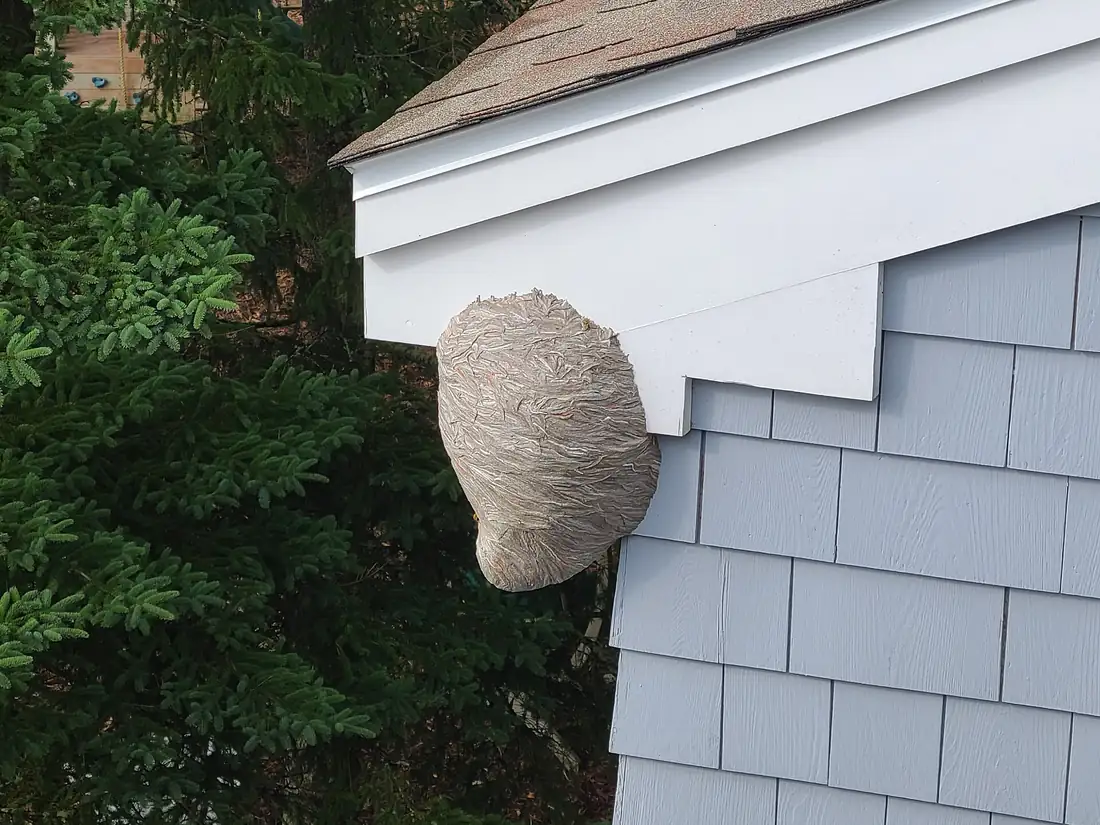
A nest over the front door, yellow jackets boiling out of the lawn when the mower passes, drilling sounds in the deck rail — stinging insects are Worcester's summer emergency, and identification decides everything.
Wasps, hornets, yellow jackets, carpenter bees and honey bees are five different problems wearing similar stripes. Some nests must come out the day they are found; some should be left alone until frost; honey bees deserve a beekeeper, not an exterminator. This page separates them, so the call you make is the right one.
Say the area or ZIP first, then what you have seen. The intake sorts it into the right service and matches a local provider.
📞 Call NowThe matched provider confirms the scope of work with you before anything begins.

Yellow jackets cause most of the trouble. They nest in the ground — old mouse burrows are a favorite — and in wall voids, growing from a spring queen to thousands of workers by late summer, which is why a nest that seemed small in June defends itself ferociously in September. They are the wasps at the picnic, the ones in the soda can, and the ones that swarm a lawnmower crossing the nest entrance.
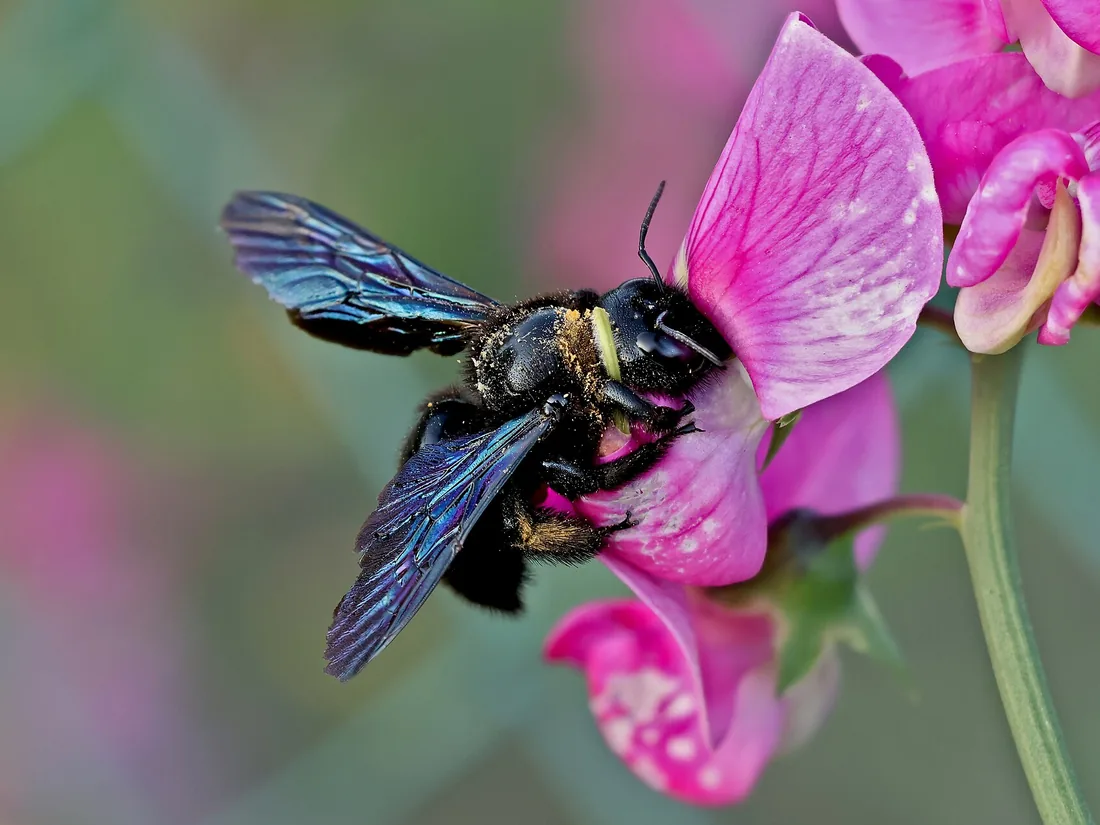
Paper wasps are the calmer tenants: small umbrella-shaped nests under eaves, porch ceilings and railing undersides, colonies of dozens rather than thousands, and a temperament that mostly minds its own business unless the nest is touched. Bald-faced hornets build the big gray football nests in trees and shrubs — impressive, defensive at close range, and usually far enough from doors to be a frost problem rather than a summer one. Carpenter bees are not nest builders at all: a female bores a round tunnel into trim, fascia or deck rails to raise young, which is a carpentry problem wearing a bee costume.
Honey bees stand apart. A honey bee swarm resting on a branch is a colony looking for a home, valuable and protected by common practice if not by statute — local beekeepers collect swarms gladly. Honey bees established inside a wall are a different and bigger job, because the colony, comb and honey all have to come out. Telling honey bees from yellow jackets — fuzzy and golden versus smooth and bright-striped — is the first thing the intake will help you do from your description.
Nest location and shape, insect appearance and behavior separate a ground-nest yellow jacket problem from a paper wasp tenancy before anyone visits.
Ground nests, eave nests, wall-void nests and tree nests are each treated differently — a void nest especially must be handled so insects are not driven deeper into the house.
Accessible nests over doors and in play areas are removed after treatment so the site does not attract next year's queens or other insects to the remains.
A treated void nest is monitored, because a large dead nest left in a wall can draw other pests. The provider explains what your wall situation calls for.
Boring sites are treated and the tunnels addressed, with the carpentry note that painted, sealed wood is rarely bored — prevention here is partly a paintbrush.
Some nests — high, distant, late-season — are honestly better left until frost ends the colony. The intake will say so when it is true, because a needless visit helps nobody.

A dry insecticide dust carried deep into the nest by the insects' own movement reaches colonies that liquids cannot — the standard approach for wall voids and underground nests.
Exposed nests are treated at the nest itself, usually in the cool of the day when the colony is home and sluggish, then removed once quiet.
Swarms and accessible colonies are passed to local beekeepers who collect them alive. It is the right outcome for the bees and usually the fastest for the homeowner.
Sealing the crack a void nest used, screening a vent, repairing bored trim — the closing step that stops the address being re-let next spring.
The mower-and-sting scenario, worst in late summer when colonies peak. Children and dogs find these nests the hard way, which is why they top the urgency list.
Paper wasps at the porch light are a nuisance; yellow jackets inside a wall void are a structural calling — scratching sounds in the wall and, if mishandled, insects indoors.
Round holes, sawdust below them, and woodpeckers following the larvae. Treating the borings and sealing the wood ends the cycle.
The season has a shape. May and June bring queen wasps founding nests — small, quiet, and the easiest removals of the year. July colonies grow and stay mostly peaceable. From mid-August the tone changes: yellow jacket colonies are at full size, their natural food thins, and they turn aggressive around food, bins and their own nest entrances. Most Worcester sting emergencies are late-summer events, and most were visible as small nests in June.
That timing shapes the honest advice. A fist-sized nest under a little-used eave in October can simply be left — frost ends the colony within weeks, and the nest will not be reused. The same nest over the front door in August should be treated now. If you are unsure which case yours is, describe the nest's size, height and distance from daily life on the call; that is exactly the information the decision needs.
One more tenant deserves separating from the wasps: the mud dauber and the other solitary wasps. A mud dauber builds small mud tubes on walls and under eaves, stocks them with paralyzed spiders, stings almost never, and reuses nothing the following year — old tubes are last season's architecture, not an active nest. Calls about mud tubes usually end in reassurance and a scraper, which is the happiest ending a stinging-insect call can have. Identification, again, is what earns it.
One call reaches the Worcester intake for this and every other service. Describe the signs once; the matched provider confirms the scope of work with you before anything begins.
📞 Call NowOne call covers every service on this site. Describe what you have seen and the building it is in — the intake sorts the job and matches it with an independent local provider, who confirms the scope of work with you before anything begins.
There are no web forms on this site. The phone call is the intake; email is there for non-urgent questions about how the service works.
📞 Call Now