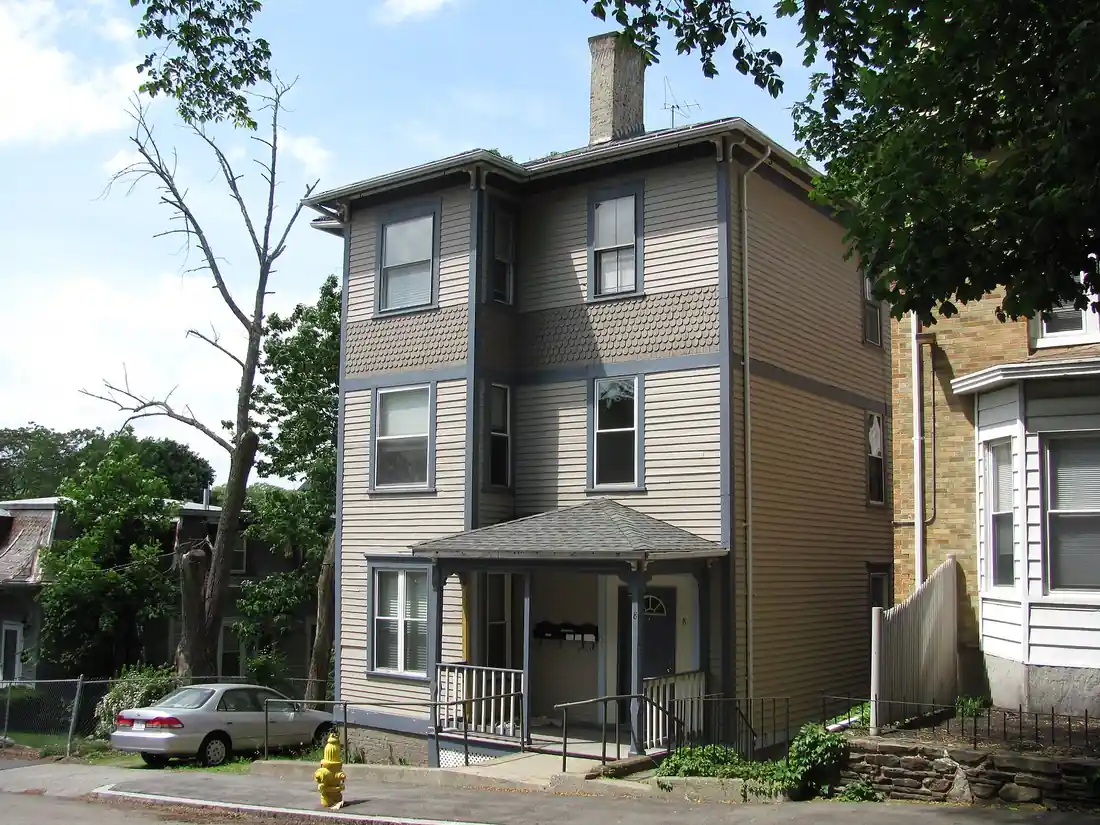
Worcester built thousands of triple-deckers between the 1890s and the 1920s — three flats stacked on one foundation, each with its own porch, built for mill workers' families and still housing a large share of the city. They are handsome, efficient buildings. They are also, from a pest's perspective, a single connected habitat with three kitchens: shared wall voids, one utility chase carrying every pipe and wire from basement to third floor, a common basement, and balloon-era framing that leaves vertical channels open from sill to attic.
That architecture is why pest problems in triple-deckers behave differently from the same problems in single-family homes, and why the standard response — treat the unit that complained — so reliably disappoints. This guide is written for the people who end up owning the whole problem: landlords and the tenants who live with the results. It covers how each major pest moves through these buildings, where the landlord's responsibility sits, and what building-wide coordination actually looks like in practice.
One Building, Three Households: The Shared Pathways
Start with the chase. In a triple-decker, the plumbing stack, water lines, drains and much of the wiring rise through one vertical shaft, typically passing through each unit's kitchen and bathroom walls in the same plane. The shaft is never sealed between floors in older construction — fire-stopping and pest-proofing were not considerations when these buildings went up. A cockroach or mouse entering that chase at the basement has unobstructed travel to every floor, with exits at every pipe penetration: under each sink, behind each stove, at each tub's access panel.
Wall voids work the same way horizontally. Balloon framing and later renovations leave continuous voids along exterior walls, and mice treat them as corridors between the basement, the units and the attic. Add the common areas — the basement itself, the shared stairwell, the attic over the third floor — and the picture completes: a triple-decker's pest habitat is the building, and its boundaries are the foundation and the roof, not the lease lines.
How Each Pest Uses the Building
Mice enter at the foundation — fieldstone mortar gaps are the classic Worcester door — nest in the basement and the voids, and commute upward through the chase and walls to feed in all three kitchens. The giveaway pattern: simultaneous droppings under sinks on multiple floors, or a problem that 'moves' from the first floor to the third after the first floor is treated. The population did not move; the treated unit was simply the part of the building where it had been noticed.
German cockroaches are the triple-decker's signature pest. They live in the kitchens and bathrooms themselves — appliance motors, cabinet hinges, sink voids — and spread unit to unit through the plumbing runs and along the backs of shared walls, as well as in the ordinary traffic of bags, boxes and used appliances between floors. A roach job in one unit, beside untreated units, is a holding action at its most effective.
Bed bugs move more slowly but as surely: along pipe and wire runs between stacked bedrooms, in shared laundry areas, and — the big one — on infested furniture carried through the common stairwell. One mattress dragged down three flights can seed every landing it brushes. Wildlife completes the cast from above and below: squirrels in the shared attic over the third floor, skunks under the common porch, each a single problem for one building regardless of whose ceiling or steps are involved.
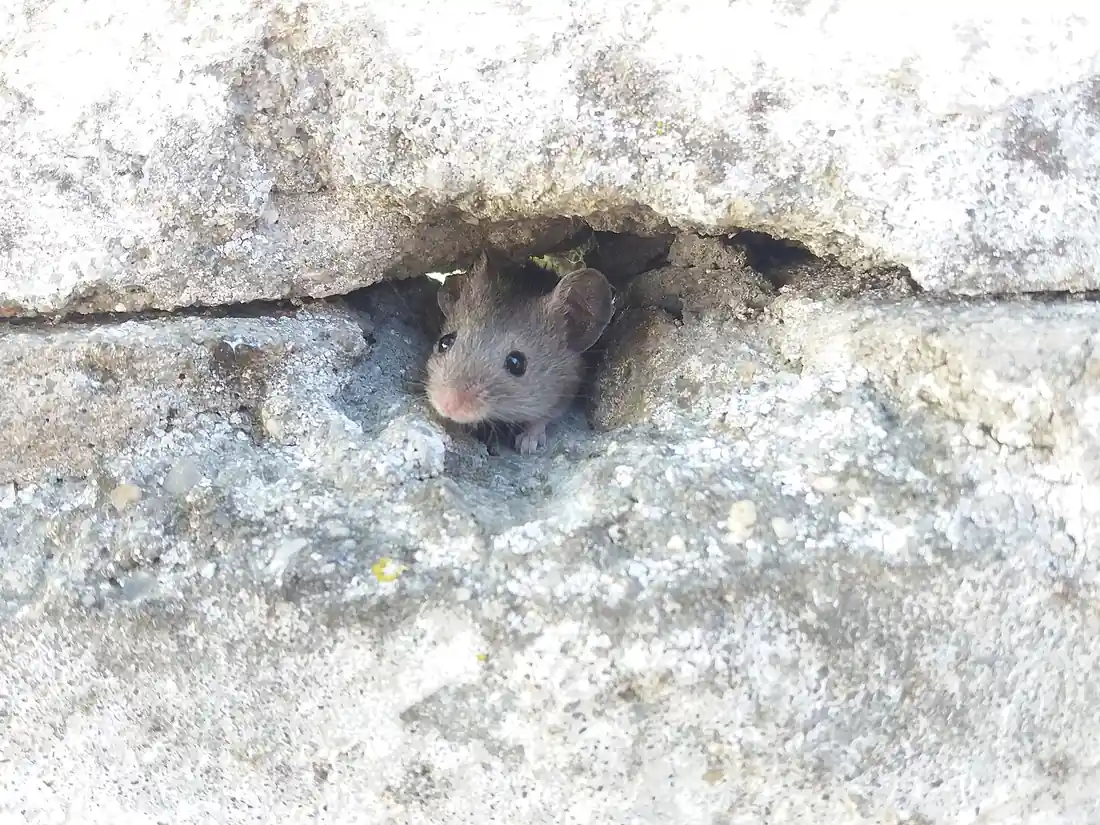
One hole, three households. Wall voids in a triple-decker connect every floor to the basement.
Where the Landlord's Responsibility Sits
Massachusetts' sanitary code puts pest infestation in rental housing largely on the owner's side of the ledger: owners are responsible for keeping rented premises clear of infestation, and in multi-unit buildings the common areas and building systems are unambiguously the owner's domain. When an infestation spans units — the normal case in a triple-decker — the treatment that matches the problem is a building treatment, arranged and paid for at the building level. Tenants' obligations run the other way: sanitation in their own units, prompt reporting of signs, and cooperation with preparation and access.
The practical reading for Worcester landlords: a tenant's pest complaint in a three-family building is a building inspection trigger, not a unit work order. Waiting for a second and third complaint before looking at the whole building converts a contained job into a full-building one, and the paper trail of ignored complaints is the part that causes trouble later. Early, documented, building-wide response is both the effective and the defensible course. (This is a plain-language summary of how responsibility generally falls, not legal advice — for a disputed case, a Massachusetts housing attorney is the right call.)
In a triple-decker, the unit boundary is a legal line, not a physical one. Pests cross it through the chase and the wall voids — so treatment has to be organized at the scale of the building, not the lease.
What Building-Wide Coordination Looks Like
It begins with an inspection that covers the building as one system: the basement and its foundation line, the chase at each floor, every unit's kitchen and bathroom (arranged with proper notice to tenants), the attic, and the porch and exterior. The output is a building map — which pests, active where, entering how — and that map sets the treatment: common areas and the worst units first, adjacent units on the same schedule, and exclusion work at the foundation and chase sealed as part of the same job.
Coordination is mostly communication. Tenants get written notice of the schedule, the preparation expected of them (the bed bug and cockroach sections of this site describe what preparation involves), and a named contact. Entry between floors for the chase and pipe penetrations is planned once, not improvised per unit. After treatment, the building gets a monitoring pass — because in a connected building, 'no more complaints' is weaker evidence than traps and a re-inspection that come back quiet.
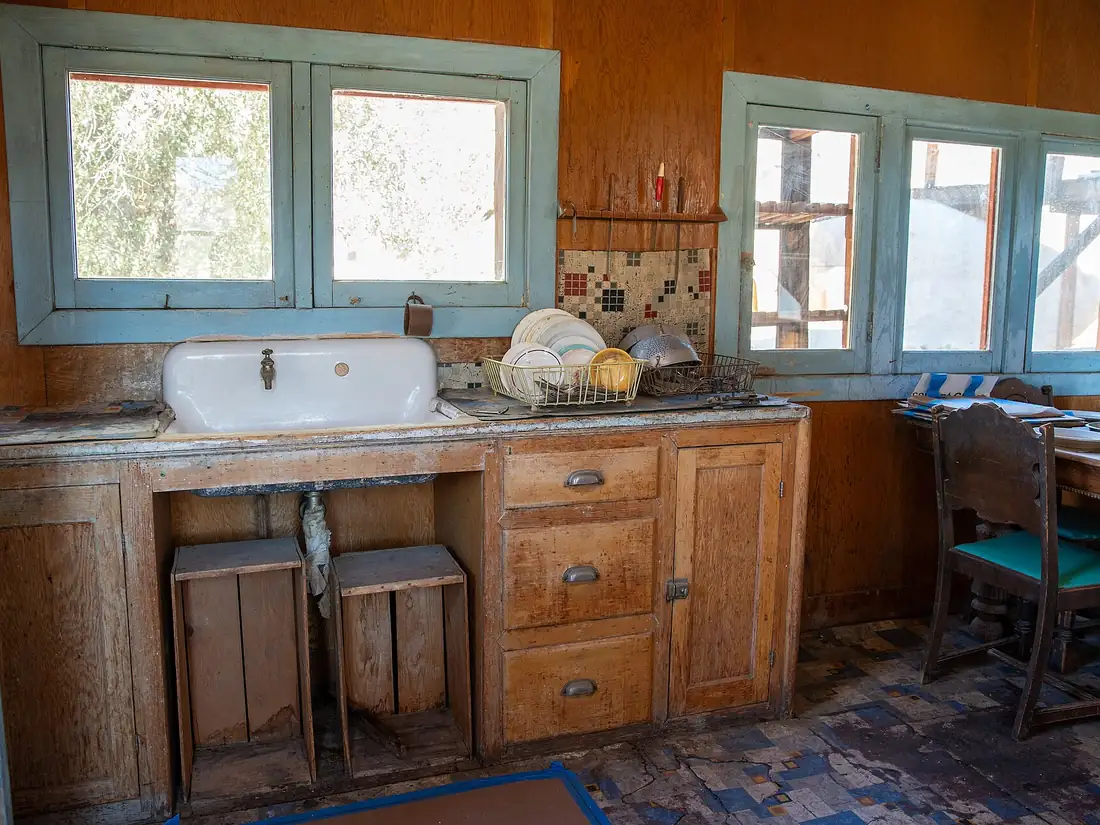
Each unit's under-sink cabinet is a station on the shared pipe chase. Signs there map the building's problem.
Prevention at Building Scale
The preventive list for a triple-decker is the single-family list, owned once at the building level. Foundation and mortar repair, with the sill line checked from the basement. The chase sealed at the basement ceiling and at each floor's penetrations where access allows — even partial chase sealing measurably slows everything that travels it. Porch lattice backed with buried mesh. A dumpster and trash routine that does not feed rodents at the foundation: lidded bins, on a slab or stand, away from the wall. Screens, sweeps and vent covers maintained as part of ordinary turnover work between tenancies.
Turnover is also the inspection opportunity: an empty unit is the easiest unit to check thoroughly — seams and joints for bed bug history, under-sink and appliance areas for roach evidence, basement and attic for rodent sign — and a documented clean check at turnover is the most valuable pest control a landlord ever arranges. Buildings that adopt the rhythm — inspect at turnover, maintain the seals, treat the building as one habitat when anything appears — are the ones whose pest history stays boring, which is the entire goal.
Records: The Unglamorous Habit That Protects Everyone
Buildings that handle pests well share one boring trait: they keep records. A simple log — date, unit, signs reported, inspection findings, treatment done, follow-up result — turns every pest event from an argument about memory into a page of facts. For landlords it documents the prompt, building-level response that Massachusetts expects; for tenants it fixes the date a problem was reported; for providers it prevents the quiet disaster of a building treated three times for a problem whose entry point was recorded, and forgotten, two years earlier.
The log lives wherever the building's other papers live, and it earns its keep at the predictable moments: a sale, a refinance inspection, a dispute, a repeat infestation whose pattern only becomes visible across entries. Worcester's triple-deckers change hands and tenants constantly. The buildings themselves stay, and their pest history stays with them — the only question is whether it is written down where the next owner can use it.
Get Help With This in Worcester
Identification is the first half. If what you found matches this guide — or you are still unsure — one call to the Worcester intake sorts it: describe the signs and the building, and get matched with an independent local provider who confirms the scope of work with you before anything begins.