✉ rankandrent2+pest-worcester@gmail.com Mon–Fri: 7 AM–10 PM · Sat: 8 AM–10 PM · Sun: 7 AM–9 PM
Home / Services / Rodent & Mice Control
Pest Control Services · Worcester, MA

Rodent & Mice Control in Worcester, MA

Droppings under the sink, scratching in the ceiling at night, a nest in the basement insulation — rodent calls are the most common pest calls in Worcester, and they peak the week the cold arrives.

House mice are built for Worcester's older housing. A mouse fits through a gap the width of a pencil, and a fieldstone foundation offers dozens of them. This page covers how to read the signs, where Worcester mice and rats actually get in, and what rodent control involves when it is done in the right order: identify, remove, seal, and monitor.

Call First — No Forms

Talk through your pest problem

Say the area or ZIP first, then what you have seen. The intake sorts it into the right service and matches a local provider.

📞 Call Now

The matched provider confirms the scope of work with you before anything begins.

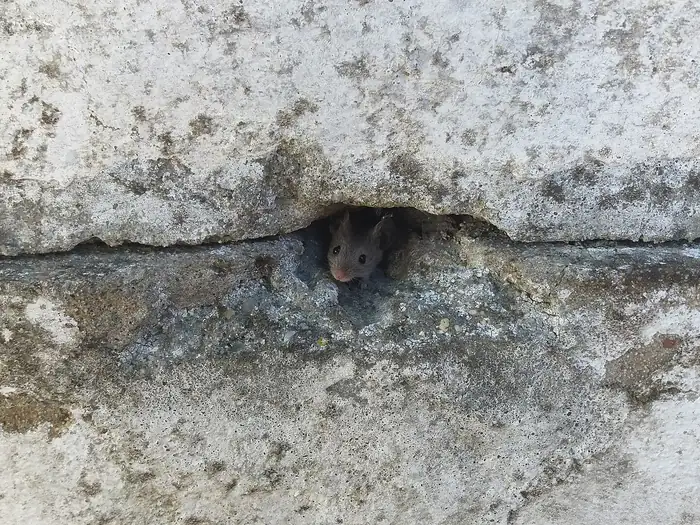
A mouse entering through a small hole in a wall
A mouse needs a gap only about the width of a pencil. Holes where pipes and wires pass through walls are the classic Worcester entry point.
The Problem

Understanding Rodent Problems in Worcester Homes

The house mouse is the year-round resident. It lives within a short run of its food source, nests in wall voids, attic insulation and the warm clutter of basements, and breeds fast enough that a pair in October can be a colony by Christmas. Rats are the second Worcester rodent — Norway rats, burrowing at foundation edges, along fences and near dumpsters, most active in the older, denser parts of the city where food waste and harborage sit close together.

Worcester's building stock does rodents favors other cities do not. Fieldstone foundations, common in the city's pre-war homes, have mortar joints that crumble into mouse-sized doorways. Triple-deckers add shared wall voids and a single utility chase carrying pipes and wires through all three floors — a rodent highway with a kitchen at every stop. Even the classic front porch helps them: the dark space under porch lattice is protected, undisturbed harborage right against the foundation.

The calendar matters too. The first cold snap of fall is when outdoor mice test every gap looking for winter quarters, and it is when most Worcester rodent calls begin. By mid-winter the signs are unmistakable: droppings along baseboards, gnawed food packaging, grease marks along runways, and the soft scratching of mice moving through a ceiling void after the house goes quiet.

Rats deserve their own paragraph, because confusing the two wastes effort. A Norway rat is a pound of animal, not an ounce: it burrows at foundation lines, travels sewers and drains, and gnaws through materials a mouse cannot touch. Rat signs are correspondingly heavier — droppings the size of olive pits, burrow holes at the foundation, rub marks at holes and pipes, gnawing that removes real wood. Worcester's rat pressure concentrates where food waste, water and harborage meet: dense older blocks, restaurant rows, river edges. A rat call is sorted differently from a mouse call from the first description, which is why the droppings guide spends so much time on a question of size.
Scope of Work

What Rodent Control Involves

✦

Identification first

Mouse or rat, one animal or a colony, active or old signs — the visit starts by reading droppings, tracks and damage so the work matches what is actually in the building.

✦

Entry-point survey

Foundation gaps, utility penetrations, door sweeps, porch edges and roofline openings are checked in order, because unsealed entries undo any other work.

✦

Removal matched to the building

Trapping and baiting approaches differ between a single-family kitchen, a triple-decker basement and a home with pets — the provider lays out what fits your building on the call.

✦

Exclusion and sealing

Gaps are sealed with rodent-resistant materials — metal mesh, hardware cloth, proper backing — not foam alone, which mice chew through in a night.

✦

Sanitation guidance

Stored food, pet food, basement clutter and dumpster placement all feed rodent pressure. The visit covers what to change so the building stops advertising itself.

✦

Follow-up monitoring

Rodent work is verified, not assumed: monitoring points show whether activity has stopped or whether another entry is still open.

The Process

How Rodent & Mice Control Works

Droppings size and freshness separate mice from rats and live activity from history. Runways, gnaw marks and nest sites map where the rodents travel.
The exterior is walked in order: foundation, utilities, doors, porch, roofline. Every gap wide enough for a pencil is noted for sealing.
The animals inside are removed with the approach matched to the building, and the entry points are sealed so the next mouse finds a closed building.
Activity is checked again after the work. Quiet monitoring points are the evidence the problem is closed, not just quieter.
Sealing a gap around a pipe with caulk and backing material
Exclusion work: sealing the gaps rodents use, so the building stops admitting new mice while the ones inside are dealt with.
Methods

Methods Rodent Providers Rely On

Exclusion before everything

Sealing is the only step that keeps working after the provider leaves. A building that admits mice will always have mice, whatever is done inside.

Snap trapping in voids

Traps placed along runways and in voids remove animals where they travel, and their results can be counted — which is how progress is measured.

Exterior bait stations

Tamper-resistant stations at the foundation line intercept rats and outdoor mice before they test the building, kept away from living spaces.

Habitat changes

Brush against foundations, woodpiles against walls, uncovered dumpsters — small changes outside cut the pressure on every seal inside.

What It Solves

Problems Rodent Control Solves

01

Droppings in kitchens and pantries

The classic first sign — and a contamination problem, since mice travel between food storage and wall voids nightly.

02

Scratching in ceilings and walls

Mice in voids are loudest at night. Rats sound heavier and slower; the sound itself is diagnostic evidence the intake will ask about.

03

Gnawed wiring and nesting in insulation

Rodents chew constantly to manage their teeth. Gnawed wiring in an attic is both damage and a hazard, and shredded insulation loses its insulating value fast.

Worcester Specifics

Rodents in Triple-Deckers and Rentals

In a three-family building, rodent control is a building problem wearing a unit problem's clothes. Mice enter at the foundation, nest in the shared basement, and visit all three kitchens through the pipe chase. Treating one unit leaves the highway open. That is why the intake asks about building type: a triple-decker call sorts to a building-wide look — common areas first, then the units — and landlords usually stay involved, because the entry points are in parts of the building no single tenant controls.

Renters have a role too: report signs early and in writing, keep food storage sealed, and note where droppings appear. Early reports are what keep a two-mouse problem from becoming a building infestation, and the triple-decker guide on this site walks through the coordination in detail.

Apartments and condos raise a smaller version of the same geometry. You may seal your own kitchen perfectly and still host mice traveling the shared wall from a neighbor's unsealed one. In attached housing, mention the building layout on the call — providers plan for the shared routes, and building management is often part of the fix, because the basement and the chases belong to everyone.

Finally, the detail that makes a rodent call short: evidence. Before you call, note where the droppings are, how large they are (rice grain or olive pit settles the species), whether they look fresh, and where any sounds come from and when. Five facts like that let the intake sort the job in a minute and send the provider in with the right plan — the difference between a first visit that inspects and a first visit that already solves.

One seasonal note for Worcester specifically: rodent calls here spike twice, not once. The first spike is the famous one, at the first hard frost. The second, quieter spike comes in late winter, when colonies born indoors in December start ranging wider for food and a building that seemed to have 'a mouse' reveals it has a population. If signs multiply in February in a home that was sealed in the fall, the residents are home-grown — another reason the monitoring step, not the calendar, closes a rodent job.

And a word about the attic, which homeowners forget because they so rarely see it. Mice nest in insulation along the eaves and around the chimney, commute down the wall voids to the kitchen, and may never cross a living space at all — the droppings appear in the rooms below while the colony lives above them. Attic evidence (droppings on insulation, tunneled nests, gnawed vent screens) is part of every thorough rodent inspection here, because sealing a basement while the attic entry stays open is the classic half-finished job.

📞 Call Now
Good Questions

Questions About Rodent & Mice Control in Worcester

Size is the giveaway. Mouse droppings are small — like grains of rice, pointed at the ends. Rat droppings are three to four times larger, blunt and capsule-shaped. Sounds differ too: mice scurry lightly; rats thump and gnaw audibly. The mice droppings guide on this site has the full comparison.
Cold. House mice live outdoors around Worcester all summer; the first frosts send them testing foundation gaps for heated space. A building sealed in September is a building without mice in January, which is why exclusion work matters most in early fall.
Yes. A young mouse passes through a gap of about a quarter inch — the width of a pencil — because its skull is the only rigid limit. Utility holes for pipes and cables are rarely cut tight, which is why they top the entry-point list.
It changes the plan, and the provider needs to know on the call. Trap placement, station locations and product choices are all adjusted for homes with pets, and pets' food storage is usually part of the sanitation conversation.
Sealing stops new mice; it does not remove the ones already nesting in the walls. The working order is remove, then seal, then monitor. Sealing first can trap an active colony inside with nothing to do but explore the kitchen.
Keep Exploring

Related Services

See every service on the services hub →

One Call

Need Rodent & Mice Control in Worcester?

One call reaches the Worcester intake for this and every other service. Describe the signs once; the matched provider confirms the scope of work with you before anything begins.

📞 Call Now
Get In Touch

Contact Us About Rodent & Mice Control

One call covers every service on this site. Describe what you have seen and the building it is in — the intake sorts the job and matches it with an independent local provider, who confirms the scope of work with you before anything begins.

There are no web forms on this site. The phone call is the intake; email is there for non-urgent questions about how the service works.

📞 Call Now
📞
Call the intake lineUse any Call Now button — one line for all of Worcester
✉
Emailrankandrent2+pest-worcester@gmail.com — for non-urgent questions
🕖
HoursMon–Fri 7 AM–10 PM · Sat 8 AM–10 PM · Sun 7 AM–9 PM ET
⌖
CoverageWorcester (15 ZIPs) · Auburn · Shrewsbury · Millbury
📞Talk to the Worcester intakeCall Now